
Cabinet Refacing vs. Replacement: Which Is Right for Your Kitchen Remodel?
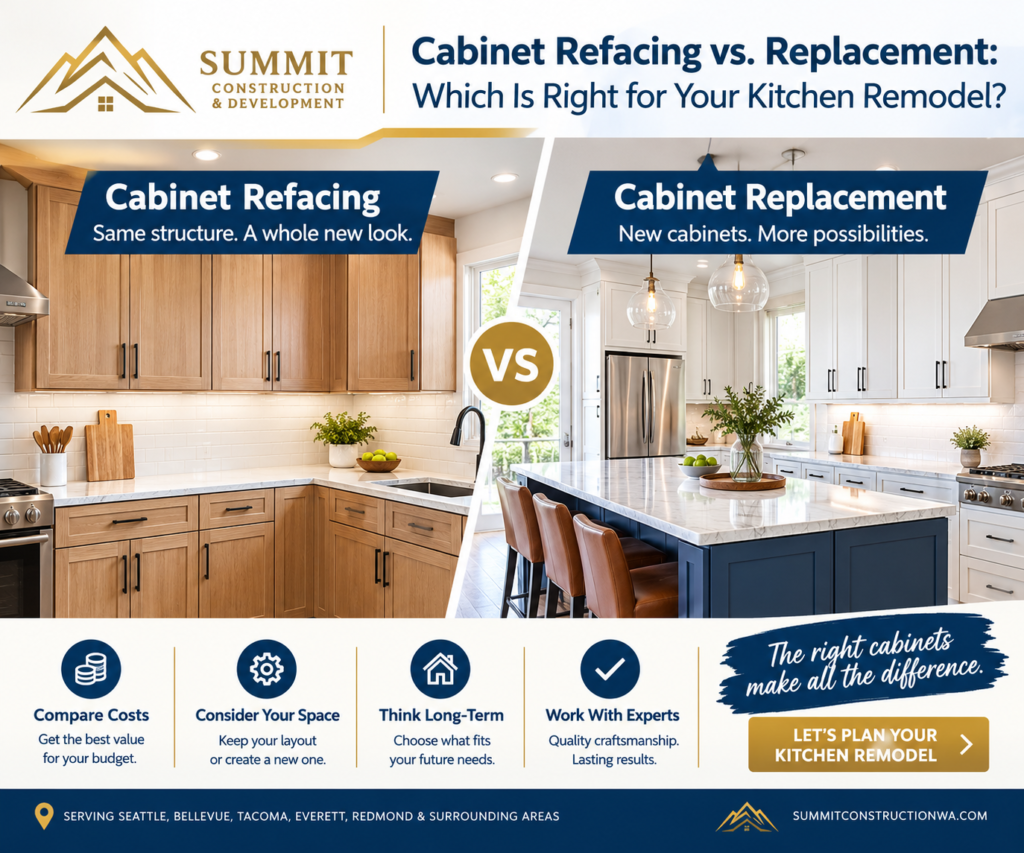
Cabinets are the largest and most visible element in any kitchen, and they typically account for a big share of a remodeling budget. That is why the choice between cabinet refacing vs replacement is one of the most important decisions you will make. Choose well and you gain a beautiful, functional kitchen at a price that makes sense. Choose poorly and you may spend more than you needed to, or end up with a kitchen that still does not work for your family. This guide breaks down both options, explains where each one shines, and helps you decide which approach fits your home, your budget, and your goals. If you are planning a kitchen update in the Seattle area, the information below will help you ask better questions when you meet with a kitchen remodeling contractor. What Is Cabinet Refacing? Refacing keeps your existing cabinet boxes in place and replaces everything you see. Old doors and drawer fronts are removed and replaced with new ones, and the exposed frames and side panels are covered with a new veneer or finish. New hinges and hardware complete the transformation. Because the cabinet boxes stay put, refacing is faster and less disruptive than a full tear-out. Your countertops, plumbing, and layout typically stay in place, which keeps your kitchen usable for more of the project. What Is Cabinet Replacement? Replacement means removing your existing cabinets entirely and installing new ones. This opens the door to a new layout, new storage solutions, and new construction details behind the walls. It is also the natural choice when your current cabinets are damaged, poorly built, or simply do not fit the way you live. Replacement is more involved. It usually affects countertops, backsplash, and sometimes flooring and electrical, since removing cabinets can disturb adjacent surfaces. In exchange, you get a completely fresh start. Cost Considerations Refacing generally costs less than replacement because you are keeping the cabinet boxes and avoiding demolition. Replacement costs more, and the total climbs quickly when you factor in new countertops, plumbing adjustments, and any layout changes. Actual prices depend on kitchen size, materials, door style, and the complexity of the work, so you should always get a written estimate for your specific project. For a broader look at what drives pricing in our area, see our kitchen remodeling cost guide for Seattle homeowners in 2026. When Refacing Makes Sense Refacing is often the smart choice when: Your layout works well. If you like where everything is, there is little reason to pay for rearranging it. Your cabinet boxes are sound. Solid wood or sturdy plywood boxes with no water damage, sagging, or warping can last for years after refacing. You want a quicker update. Refacing usually takes less time than a full replacement, so your household is less disrupted. You want to preserve your countertops. Keeping existing surfaces avoids a major expense and extra demolition. Your budget is limited. Refacing delivers a dramatic visual change without the full cost of new cabinetry. When Replacement Is the Better Investment Replacement tends to be the right call when: The layout is not working. Tight walkways, poor workflow, or too little counter space cannot be solved with new doors. The boxes are damaged. Water damage, mold, swelling particleboard, or failing construction cannot be hidden with a new face. You need more storage. New cabinets can include deep drawers, pull-outs, pantry units, and organizers that refacing cannot add. You are doing a full renovation. If countertops, appliances, and flooring are all changing, installing new cabinets alongside them is more efficient. You want a specific style. Custom sizes, inset doors, or particular finishes may be easier to achieve with new construction. Washington’s damp climate is worth keeping in mind. Cabinets under sinks and near dishwashers are vulnerable to moisture over time, so have a professional inspect the boxes carefully before you commit to refacing. Timeline Differences Refacing projects often take about a week or so once materials arrive, though larger kitchens take longer. Replacement projects can run several weeks to a couple of months, especially if custom cabinets are being built. Lead times for cabinetry vary, so ordering early is wise. If you are working in a smaller space, our article on small kitchen remodel ideas that make a big impact offers smart ways to gain function without expanding the footprint. Style and Material Choices Whichever route you choose, the finish you select has a major effect on how your kitchen looks and lasts. Painted finishes: Popular for a clean, classic look. They require periodic touch-ups in busy kitchens. Natural wood: Offers warmth and grain and pairs well with the Pacific Northwest aesthetic. Thermofoil and laminate: Budget-friendly and low maintenance, though they can be sensitive to heat and moisture. Slab and shaker doors: Slab doors read modern and minimal, while shaker doors remain a timeless favorite that suits many home styles. Hardware is a small detail with a big impact. New pulls and knobs can change the character of a kitchen for relatively little money. Do Not Forget the Surrounding Surfaces New cabinets look best when the surrounding surfaces support them. Tired flooring, dated lighting, and worn countertops can undercut even a beautiful cabinet upgrade. If your floors are due for replacement, coordinating the work with a flooring installation project can save time and avoid damage to finished surfaces. Questions to Ask Before You Decide Before choosing refacing or replacement, ask yourself and your contractor: Are my existing cabinet boxes in good structural condition? Does my current layout support how I cook, entertain, and store things? How long will my kitchen be out of service? What is included in the estimate, and what could change the price? How will the new cabinets handle moisture and daily wear? Honest answers to these questions usually point clearly toward one option or the other. A Quick Decision Framework If you are still undecided, run through this simple check. Answer yes to most of the first group and refacing