
Pavers vs. Poured Concrete vs. Natural Stone: Choosing the Right Patio Material
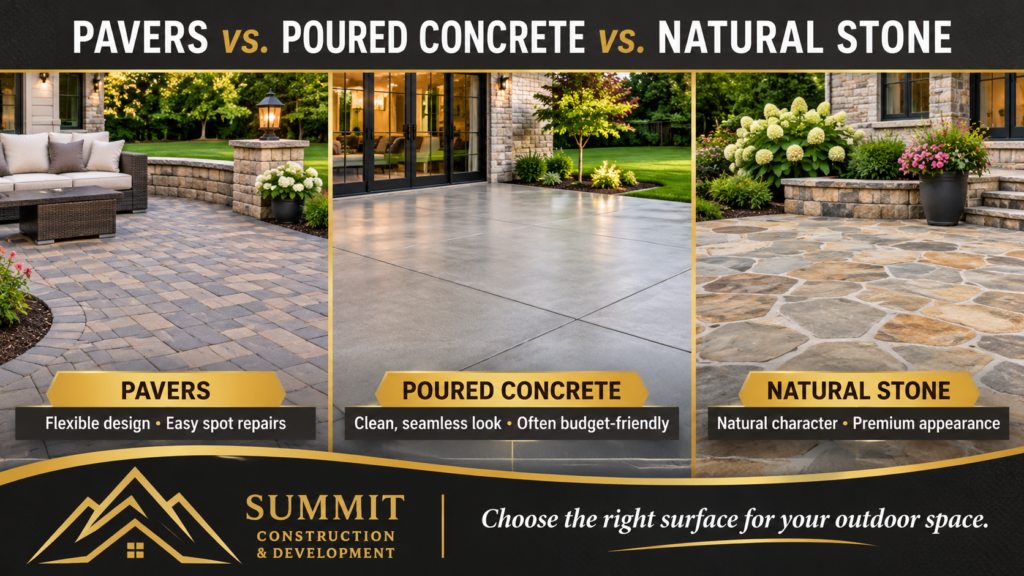
A well-designed patio extends your living space, adds value to your property, and gives your family a place to gather outdoors. Before you start dreaming about furniture and fire pits, though, you face a big decision: what should the patio be made of? For most homeowners, the choice comes down to patio pavers vs concrete vs natural stone. Each material has real strengths and real tradeoffs. Washington’s rainy winters, freeze-thaw cycles in some areas, and clay-heavy or poorly draining soils all influence which option performs best. This guide compares the three materials side by side so you can choose with confidence and work with a hardscape contractor to bring your plan to life. Concrete Pavers Pavers are individual units made from concrete or clay, installed over a compacted base and set in a pattern. They come in a huge range of shapes, sizes, colors, and textures. Advantages: Flexible design: Endless patterns, borders, and color combinations make it easy to create a custom look. Easy repairs: If a paver cracks or stains, you can replace that single piece without disturbing the rest. Good drainage: Joints between pavers allow some water to drain, which can help with Pacific Northwest rainfall when the base is built correctly. Movement tolerance: Because the surface is made of separate pieces, it handles minor ground movement better than a rigid slab. Slip resistance: Many paver textures offer solid traction when wet. Drawbacks: Higher upfront cost than a basic concrete slab in many cases. Weeds and moss: Joints can grow weeds or moss if not maintained, though polymeric sand and regular sweeping help. Dependence on installation quality: A poorly compacted base leads to settling, uneven surfaces, and shifting stones. Poured Concrete Poured concrete is the classic budget-friendly patio surface. It is mixed, poured into forms, and finished into a smooth, durable slab. It can also be stamped, stained, or exposed with aggregate for added visual interest. Advantages: Lower initial cost: Plain concrete is often the most economical option for large areas. Quick installation: Pouring a slab is generally faster than laying pavers or stone. Clean, modern look: Smooth or broom-finished concrete suits contemporary designs. Decorative options: Stains, stamps, and exposed aggregate can add character. Drawbacks: Cracking: Concrete can crack from settling, tree roots, or freeze-thaw cycles, even with control joints. Difficult repairs: Patching a crack rarely makes it disappear, and replacing a section can leave a visible mismatch. Surface drainage: A solid slab sheds water instead of absorbing it, so grading and drainage planning are critical. Slippery when wet: Smooth finishes can become slick, so choose a textured finish in rainy climates. Natural Stone Flagstone, bluestone, travertine, and slate are popular choices for homeowners who want a premium, organic look. Each stone has its own color, texture, and character, and no two patios look exactly alike. Advantages: Unmatched beauty: Natural variation in color and texture gives stone a timeless, high-end appearance. Durability: Many natural stones last for decades with proper installation. Blends with the landscape: Stone complements the greenery and woodland feel of many Western Washington properties. Drawbacks: Highest cost: Material and labor are usually the most expensive of the three options. Maintenance: Some stones need sealing, and moss can grow on shaded, damp surfaces. Surface variation: Irregular stones can create an uneven surface that is less comfortable for furniture. Slipperiness: Certain smooth stones can be slick when wet, so texture matters. Climate Considerations in Western Washington Moisture is the defining challenge for outdoor surfaces in our region. Shaded patios stay damp longer, which encourages moss and algae on any material. Planning for drainage, choosing textured surfaces, and allowing sunlight where possible all help reduce slipperiness and growth. Soil conditions also matter. Clay soils hold water and can heave or settle, while sandy soils drain quickly but may shift. A proper base made of compacted aggregate is the foundation of any durable patio, and cutting corners here is the most common reason patios fail early. Comparing the Three at a Glance Budget: Poured concrete is usually the lowest cost, pavers fall in the middle, and natural stone is typically the highest. Longevity: All three can last for decades when installed correctly. Pavers and stone are more forgiving of ground movement than rigid concrete. Maintenance: Concrete needs sealing and crack monitoring, pavers need joint maintenance, and stone may need sealing and moss control. Appearance: Pavers offer the widest range of designs, stone delivers organic elegance, and concrete provides a clean, modern base that can be customized. Repairability: Pavers are easiest to repair, while concrete is the most difficult. Think Beyond the Patio Surface The material you choose is only one part of the picture. Walkways, retaining walls, steps, and fire features all benefit from a unified design. If you need ideas, browse our article on backyard hardscape design ideas for Washington homes for inspiration on layouts, lighting, and outdoor living areas. Consider how the patio will connect to other structures too. A patio paired with a wood or composite deck can create distinct zones for dining, lounging, and cooking. A well-built wooden fence adds privacy and frames the space. Drainage and Grading Matter More Than You Think Whatever material you choose, water must move away from your home and off the patio surface. The ground should slope gently away from the foundation, and the base should be designed to prevent pooling. In wet climates, adding drainage solutions such as French drains or permeable surfaces can protect both the patio and your house. Ask your contractor how they plan to manage runoff before work begins. A confident answer is a good sign that your project is in capable hands. Questions to Ask Before You Choose How much shade does the patio area get, and how will that affect moss growth? What is my soil type, and how will the base be prepared? What is my budget for the initial installation and long-term upkeep? How do I want the space to look and feel alongside my home and landscaping? How