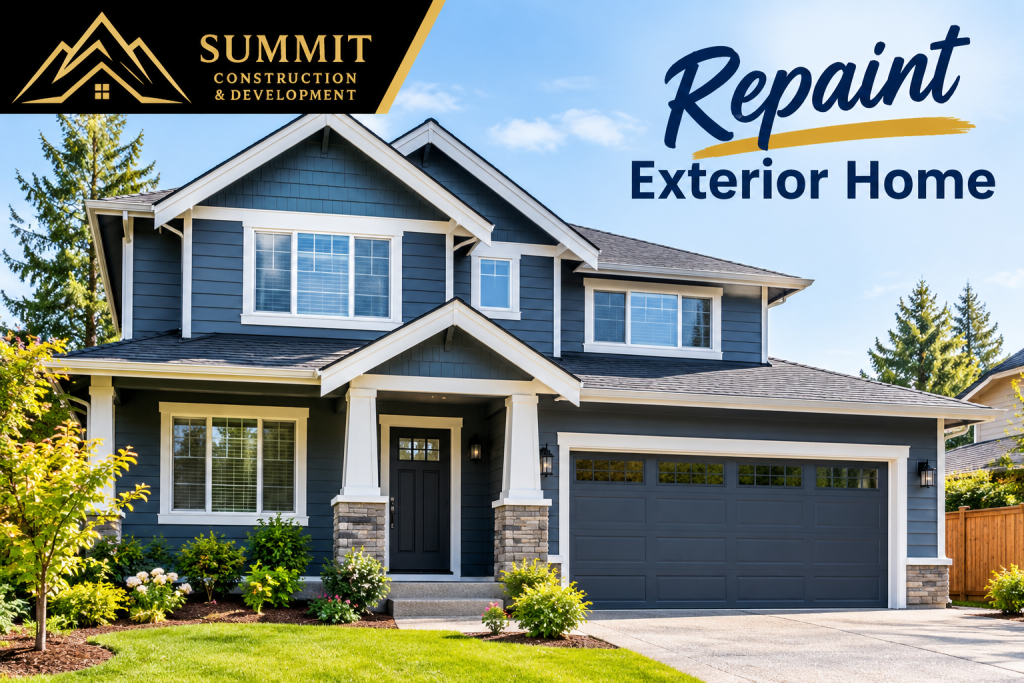

Exterior paint does more than shape your home’s curb appeal. It is a protective barrier against moisture, UV exposure, and the wear and tear of Western Washington’s weather. Once that barrier starts to fail, whether through cracking, peeling, or fading, the surfaces underneath, whether wood siding, trim, or fascia boards, become vulnerable to moisture damage that is far more expensive to fix than a paint job. Here are eight signs it is time to repaint, along with what to know about doing it well in our climate.
1. Visible Peeling or Cracking
Paint that is peeling, cracking, or flaking away from the surface has lost its ability to protect the material underneath from moisture. This is one of the clearest, most urgent signs that repainting is needed, since exposed wood or siding beneath failing paint is actively vulnerable to water damage.
2. Fading and Chalking
Paint naturally fades over time from UV exposure, but a more specific sign is chalking, a powdery residue that appears on the surface when paint has broken down and rubs off on your hand when touched. Chalking indicates the paint has reached the end of its protective lifespan even if it has not visibly peeled yet.
3. Caulk Separation Around Trim and Windows
Cracked or separated caulk around windows, doors, and trim allows moisture to work its way behind the exterior surface, which can lead to rot in the framing underneath. This is often an early warning sign that repainting, along with a caulk refresh, is due even before the paint itself looks obviously worn.
4. Bubbling or Blistering Paint
Bubbles or blisters in the paint surface usually indicate moisture trapped underneath, either from humidity, a small leak, or improper application originally. This is worth addressing sooner rather than later, since it often points to an underlying moisture issue that needs attention beyond just a fresh coat of paint.
5. Wood Rot or Soft Spots
If you notice soft, spongy wood when pressing on trim, fascia boards, or siding, this indicates rot has already set in, likely because paint failure allowed moisture to penetrate. Any rot needs to be repaired or the affected wood replaced before repainting, since paint cannot fix structural wood damage.
6. It Has Been Several Years Since the Last Paint Job
Exterior paint in Western Washington’s climate typically has a shorter effective lifespan than in drier regions, given the near-constant moisture exposure. Even if your paint looks reasonably intact, if it has been many years since your home was last painted, a proactive repaint can prevent the more serious issues that come with paint failure.
7. Increased Moisture Damage or Mold Growth
Mold or mildew that keeps returning on exterior surfaces, even after cleaning, can indicate that the paint’s protective seal has broken down, allowing moisture to linger against the siding rather than shedding properly.
8. You Are Preparing to Sell Your Home
A fresh, well-maintained exterior paint job is one of the most impactful curb appeal investments you can make before listing a home. Beyond aesthetics, it signals to buyers that the home has been well cared for, which can influence both interest and offers.
Why Exterior Paint Wears Faster in Western Washington
Our climate’s nine months of rain, combined with periods of intense summer sun, put exterior paint through more stress than paint in drier, more stable climates. Moisture causes wood to expand and contract, which stresses the paint film and accelerates cracking, while UV exposure during summer months breaks down paint’s protective binders over time. Choosing a high-quality exterior paint formulated for wet climates, and having it applied correctly with proper surface preparation, makes a meaningful difference in how long it lasts here.
The Importance of Proper Preparation
A quality exterior paint job is only as good as the preparation behind it. Proper prep includes scraping and sanding failing paint, repairing any rot or damaged wood, priming bare or repaired surfaces, and recaulking around trim, windows, and doors. Skipping these steps to save time results in a paint job that fails much sooner, regardless of how good the paint itself is.
DIY vs. Hiring a Professional Painter
A fresh coat of paint can seem like a manageable do-it-yourself project, but exterior painting involves more than most homeowners anticipate, including working safely at height, properly diagnosing and repairing underlying wood damage, and achieving consistent coverage and finish across a large surface area. A professional painting crew also typically has access to commercial-grade equipment, like sprayers and proper scaffolding or lift equipment, that produces a more even, longer-lasting finish than most DIY setups can achieve. For a small trim touch-up, DIY is often reasonable, but a full exterior repaint is generally worth hiring a professional for, both for the quality of the result and for safety.
Choosing the Right Paint and Color for Our Climate
Not all exterior paint is created equal, and this matters more in a climate as demanding as ours. Look for paint specifically formulated for exterior use with strong moisture resistance and UV protection, and consider a paint with mildew-resistant additives given how much of the year our region spends in damp conditions. Higher-quality paints generally cost more per gallon but provide better coverage, longer-lasting color, and stronger protection, which often makes them the more cost-effective choice over the life of the paint job despite the higher upfront price.
When it comes to color, lighter and more reflective tones tend to show less fading over time than darker, more saturated colors, which absorb more UV energy and can fade or chalk more quickly. If you love a bold, dark color, choosing a high-quality paint specifically engineered to resist UV fading becomes even more important to protect that investment.
Frequently Asked Questions
How often should I repaint my home’s exterior in Western Washington? This varies based on paint quality, surface material, and sun and moisture exposure, but our climate generally shortens the typical repaint interval compared to drier regions. Watching for the signs above is more reliable than following a fixed schedule.
Is it cheaper to repaint over failing paint than to fully prep the surface first? It may seem cheaper upfront, but skipping proper prep, including scraping, sanding, and priming, results in a paint job that fails much faster, which usually costs more in the long run through more frequent repainting.
Can I paint over wood rot? No. Paint does not repair or stop the progression of rot. Any rotted wood needs to be repaired or replaced before painting, or the rot will continue to spread underneath the fresh paint.
What time of year is best for exterior painting in Western Washington? Late spring through early fall generally offers the driest, most stable conditions for exterior painting, since paint needs adequate dry time to cure properly and rainy conditions can compromise the application.
Protect Your Home With a Quality Exterior Paint Job
Exterior paint is one of the most cost-effective ways to protect your home’s structure and boost its curb appeal. Summit Construction & Development provides thorough, properly prepped exterior painting for homeowners throughout Seattle, Bellevue, Tacoma, Everett, Redmond, and the surrounding Western Washington communities. Call (206) 992-4400 or email info@summitconstructionwa.com to schedule a consultation.