A deck is one of the highest-value additions you can make to a home in a region as outdoor-oriented as Western Washington, where the dry summer months make outdoor living space especially valuable. When it comes time to build or replace one, the decision between natural wood and composite decking is one of the first, and most important, choices you will make. Both have real strengths. Here is how they actually compare.
Upfront Cost
Natural wood, particularly pressure-treated lumber, is generally the more affordable option upfront. Cedar and other premium wood species cost more than pressure-treated lumber but are still typically less expensive initially than composite decking. Composite decking carries a higher upfront material cost, which is one of the main reasons homeowners weigh the two options carefully before deciding.
Long-Term Maintenance
This is where the comparison shifts significantly. Wood decking, especially in Western Washington’s wet climate, requires regular maintenance to perform well and look good over time. That typically means annual or biennial cleaning, sanding as needed, and staining or sealing to protect against moisture, UV exposure, and the freeze-thaw cycles common here. Skipping this maintenance accelerates graying, splintering, and rot.
Composite decking requires dramatically less maintenance. Most composite products only need occasional washing to remove dirt, pollen, or mildew, with no staining, sealing, or sanding required. Over the life of the deck, this maintenance difference often narrows or even reverses the upfront cost gap.
Durability and Lifespan
Composite decking generally outlasts wood decking, particularly in a wet climate where wood is more susceptible to rot, insect damage, and warping over time. Quality composite products are engineered to resist moisture, fading, and staining, and many carry lengthy warranties reflecting that durability. Wood decking, even with diligent maintenance, has a shorter practical lifespan before boards need replacing due to rot, splitting, or structural wear, particularly for boards in constant contact with moisture.
Appearance and Feel
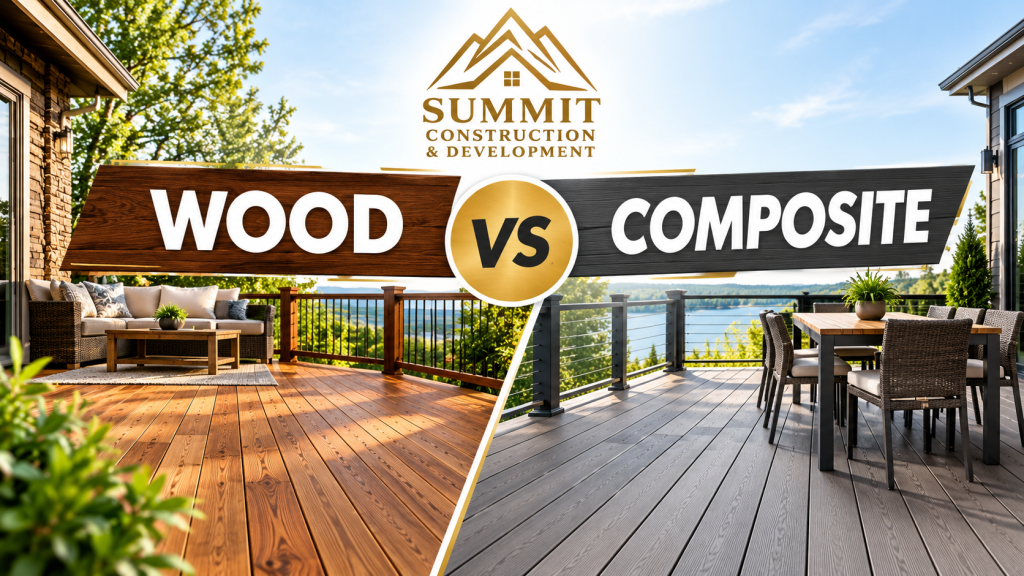
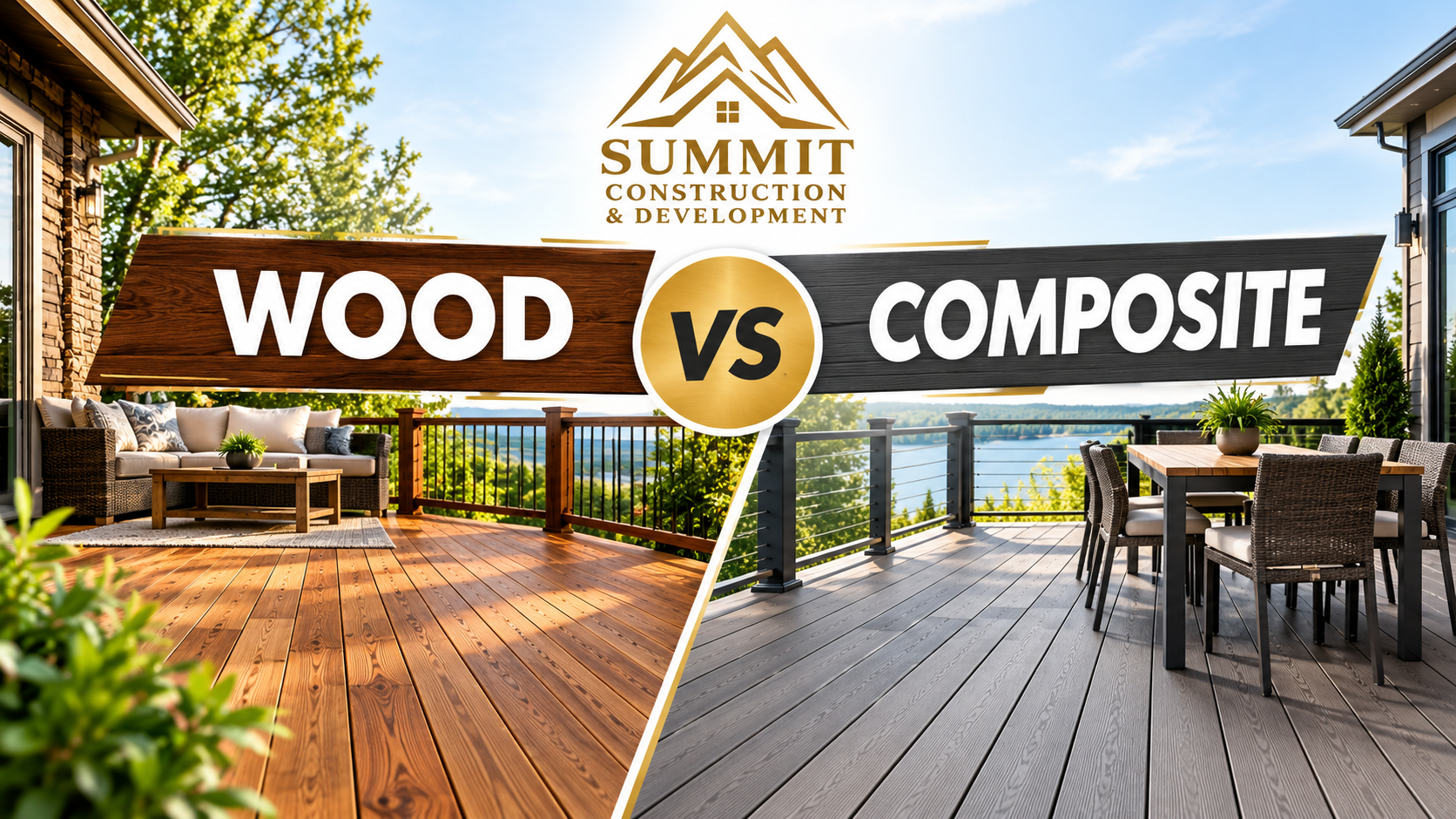
Natural wood has an authentic warmth, texture, and grain variation that many homeowners genuinely prefer, and it can be stained in a range of colors to match a home’s exterior. Composite decking has improved significantly in appearance over the years, with modern products offering convincing wood-grain texture and a range of colors, though some homeowners can still tell the difference up close. Wood also tends to feel slightly cooler underfoot in direct sun compared to some composite products, which can retain more heat.
Environmental Considerations
Composite decking is typically made from a combination of recycled wood fibers and recycled plastic, which appeals to homeowners prioritizing recycled content. Sustainably sourced or FSC-certified wood decking is a renewable resource, though it requires more ongoing chemical treatment (stains and sealants) over its lifespan than composite does.
Which Performs Better in Western Washington’s Climate Specifically?
Our climate is genuinely tough on wood decking. Nine months of rain, combined with periods of dry summer heat, create ideal conditions for wood to expand, contract, and eventually warp or crack if not properly maintained. Composite decking’s resistance to moisture absorption makes it particularly well-suited to this climate, which is a major reason it has grown in popularity throughout the region even with its higher upfront cost.
Warranty Differences Worth Understanding
Composite decking products typically carry longer warranties than wood, often reflecting the manufacturer’s confidence in the material’s resistance to fading, staining, and structural issues over time. Wood decking generally does not carry a comparable product warranty, since its performance depends heavily on ongoing maintenance rather than the material itself. When comparing composite products, it is worth reading warranty terms carefully, since some cover only structural defects while others also cover fading or staining, which affects the practical value of the coverage.
Making the Right Choice for Your Deck
Choose wood if: You prioritize the authentic look and feel of natural material, your upfront budget is the primary constraint, and you are willing to commit to regular maintenance to protect your investment.
Choose composite if: You want to minimize long-term maintenance, you plan to stay in your home long enough to benefit from composite’s longer lifespan, and your budget supports the higher initial investment.
Many homeowners also choose a hybrid approach, using composite decking for the boards and wood, or a low-maintenance metal, for the railing and structural framing, balancing cost, appearance, and maintenance across different parts of the project.
Railing, Substructure, and Fasteners Matter Too
The decking boards themselves get most of the attention, but the substructure, railings, and fasteners play a significant role in how well a deck performs over time, regardless of which decking material you choose. Pressure-treated joists and framing remain the standard structural base for most decks in our region, and proper spacing and support are critical to prevent sagging or bounce, particularly under composite decking, which can require different joist spacing than wood depending on the manufacturer’s specifications.
Fasteners matter more than many homeowners realize. Hidden fastener systems, increasingly common with composite decking, create a cleaner surface without visible screw heads, while also reducing the small gaps where moisture and debris can collect around exposed fastener heads. Railings, whether wood, composite, metal, or cable, should be chosen not just for appearance but for how well they hold up to our climate’s moisture exposure over time.
Planning for How You Will Actually Use the Deck
Before finalizing a material decision, it helps to think through how the deck will actually be used. A deck primarily used for entertaining and outdoor dining benefits from a smooth, splinter-free surface, which favors composite or well-maintained smooth-finish wood. A deck intended for bare feet around a hot tub or in direct summer sun should account for how each material handles heat, since some composite products can retain more heat underfoot in direct sunlight than natural wood. If you are building a multi-level deck or one with significant stairs and railings, discuss material options for each component with your contractor, since mixing materials strategically across different parts of the structure can balance cost, appearance, and performance effectively.
Frequently Asked Questions
Does composite decking really require zero maintenance? Not entirely zero, but significantly less than wood. Most composite decking needs periodic washing to remove dirt, pollen, and mildew, but does not require staining, sealing, or sanding the way wood does.
How long does wood decking last with proper maintenance in Western Washington? With diligent annual or biennial maintenance, wood decking can last well over a decade, though individual boards may need replacement sooner due to localized wear, moisture exposure, or damage.
Is composite decking worth the higher upfront cost? For many homeowners, yes, particularly those who value low maintenance and plan to stay in their home for many years. The math depends on how you weigh upfront cost against long-term maintenance time and expense.
Can I mix wood and composite materials in the same deck? Yes, this is a common approach. Using composite for decking boards while using wood or metal for structural framing and railings can balance appearance, cost, and maintenance needs.
Ready to Build or Replace Your Deck?
Choosing between wood and composite decking comes down to your priorities, budget, and how much time you want to spend on upkeep. Summit Construction & Development builds quality decks for homeowners throughout Seattle, Bellevue, Tacoma, Everett, Redmond, and the surrounding Western Washington communities, using materials suited to our climate. Call (206) 992-4400 or email info@summitconstructionwa.com to schedule a consultation.