
Wood vs. Composite Decking: Which Should You Choose?
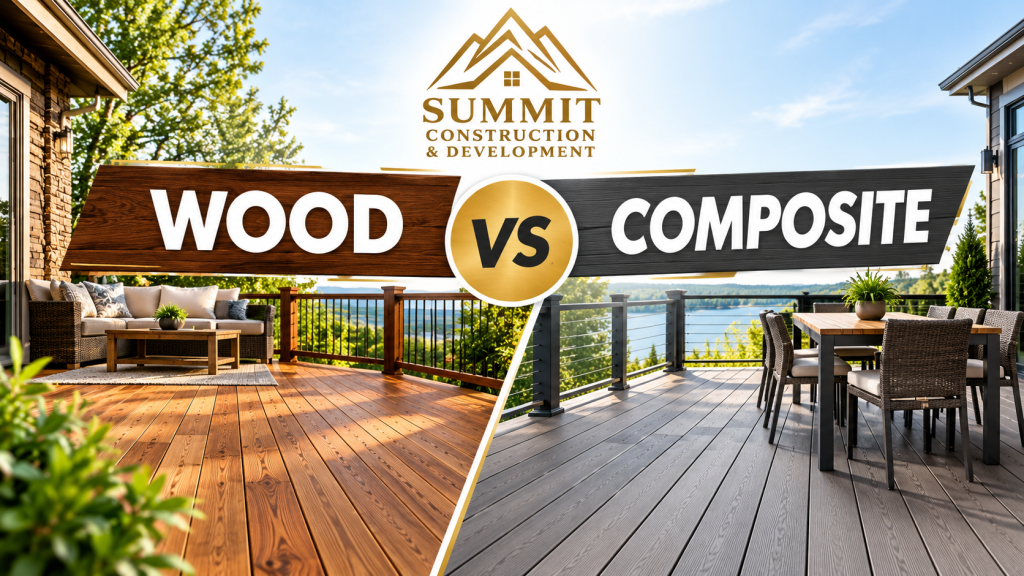
A deck is one of the highest-value additions you can make to a home in a region as outdoor-oriented as Western Washington, where the dry summer months make outdoor living space especially valuable. When it comes time to build or replace one, the decision between natural wood and composite decking is one of the first, and most important, choices you will make. Both have real strengths. Here is how they actually compare. Upfront Cost Natural wood, particularly pressure-treated lumber, is generally the more affordable option upfront. Cedar and other premium wood species cost more than pressure-treated lumber but are still typically less expensive initially than composite decking. Composite decking carries a higher upfront material cost, which is one of the main reasons homeowners weigh the two options carefully before deciding. Long-Term Maintenance This is where the comparison shifts significantly. Wood decking, especially in Western Washington’s wet climate, requires regular maintenance to perform well and look good over time. That typically means annual or biennial cleaning, sanding as needed, and staining or sealing to protect against moisture, UV exposure, and the freeze-thaw cycles common here. Skipping this maintenance accelerates graying, splintering, and rot. Composite decking requires dramatically less maintenance. Most composite products only need occasional washing to remove dirt, pollen, or mildew, with no staining, sealing, or sanding required. Over the life of the deck, this maintenance difference often narrows or even reverses the upfront cost gap. Durability and Lifespan Composite decking generally outlasts wood decking, particularly in a wet climate where wood is more susceptible to rot, insect damage, and warping over time. Quality composite products are engineered to resist moisture, fading, and staining, and many carry lengthy warranties reflecting that durability. Wood decking, even with diligent maintenance, has a shorter practical lifespan before boards need replacing due to rot, splitting, or structural wear, particularly for boards in constant contact with moisture. Appearance and Feel Natural wood has an authentic warmth, texture, and grain variation that many homeowners genuinely prefer, and it can be stained in a range of colors to match a home’s exterior. Composite decking has improved significantly in appearance over the years, with modern products offering convincing wood-grain texture and a range of colors, though some homeowners can still tell the difference up close. Wood also tends to feel slightly cooler underfoot in direct sun compared to some composite products, which can retain more heat. Environmental Considerations Composite decking is typically made from a combination of recycled wood fibers and recycled plastic, which appeals to homeowners prioritizing recycled content. Sustainably sourced or FSC-certified wood decking is a renewable resource, though it requires more ongoing chemical treatment (stains and sealants) over its lifespan than composite does. Which Performs Better in Western Washington’s Climate Specifically? Our climate is genuinely tough on wood decking. Nine months of rain, combined with periods of dry summer heat, create ideal conditions for wood to expand, contract, and eventually warp or crack if not properly maintained. Composite decking’s resistance to moisture absorption makes it particularly well-suited to this climate, which is a major reason it has grown in popularity throughout the region even with its higher upfront cost. Warranty Differences Worth Understanding Composite decking products typically carry longer warranties than wood, often reflecting the manufacturer’s confidence in the material’s resistance to fading, staining, and structural issues over time. Wood decking generally does not carry a comparable product warranty, since its performance depends heavily on ongoing maintenance rather than the material itself. When comparing composite products, it is worth reading warranty terms carefully, since some cover only structural defects while others also cover fading or staining, which affects the practical value of the coverage. Making the Right Choice for Your Deck Choose wood if: You prioritize the authentic look and feel of natural material, your upfront budget is the primary constraint, and you are willing to commit to regular maintenance to protect your investment. Choose composite if: You want to minimize long-term maintenance, you plan to stay in your home long enough to benefit from composite’s longer lifespan, and your budget supports the higher initial investment. Many homeowners also choose a hybrid approach, using composite decking for the boards and wood, or a low-maintenance metal, for the railing and structural framing, balancing cost, appearance, and maintenance across different parts of the project. Railing, Substructure, and Fasteners Matter Too The decking boards themselves get most of the attention, but the substructure, railings, and fasteners play a significant role in how well a deck performs over time, regardless of which decking material you choose. Pressure-treated joists and framing remain the standard structural base for most decks in our region, and proper spacing and support are critical to prevent sagging or bounce, particularly under composite decking, which can require different joist spacing than wood depending on the manufacturer’s specifications. Fasteners matter more than many homeowners realize. Hidden fastener systems, increasingly common with composite decking, create a cleaner surface without visible screw heads, while also reducing the small gaps where moisture and debris can collect around exposed fastener heads. Railings, whether wood, composite, metal, or cable, should be chosen not just for appearance but for how well they hold up to our climate’s moisture exposure over time. Planning for How You Will Actually Use the Deck Before finalizing a material decision, it helps to think through how the deck will actually be used. A deck primarily used for entertaining and outdoor dining benefits from a smooth, splinter-free surface, which favors composite or well-maintained smooth-finish wood. A deck intended for bare feet around a hot tub or in direct summer sun should account for how each material handles heat, since some composite products can retain more heat underfoot in direct sunlight than natural wood. If you are building a multi-level deck or one with significant stairs and railings, discuss material options for each component with your contractor, since mixing materials strategically across different parts of the structure can balance cost, appearance, and performance effectively. Frequently Asked Questions Does composite
Backyard Hardscape Design Ideas for Washington Homes
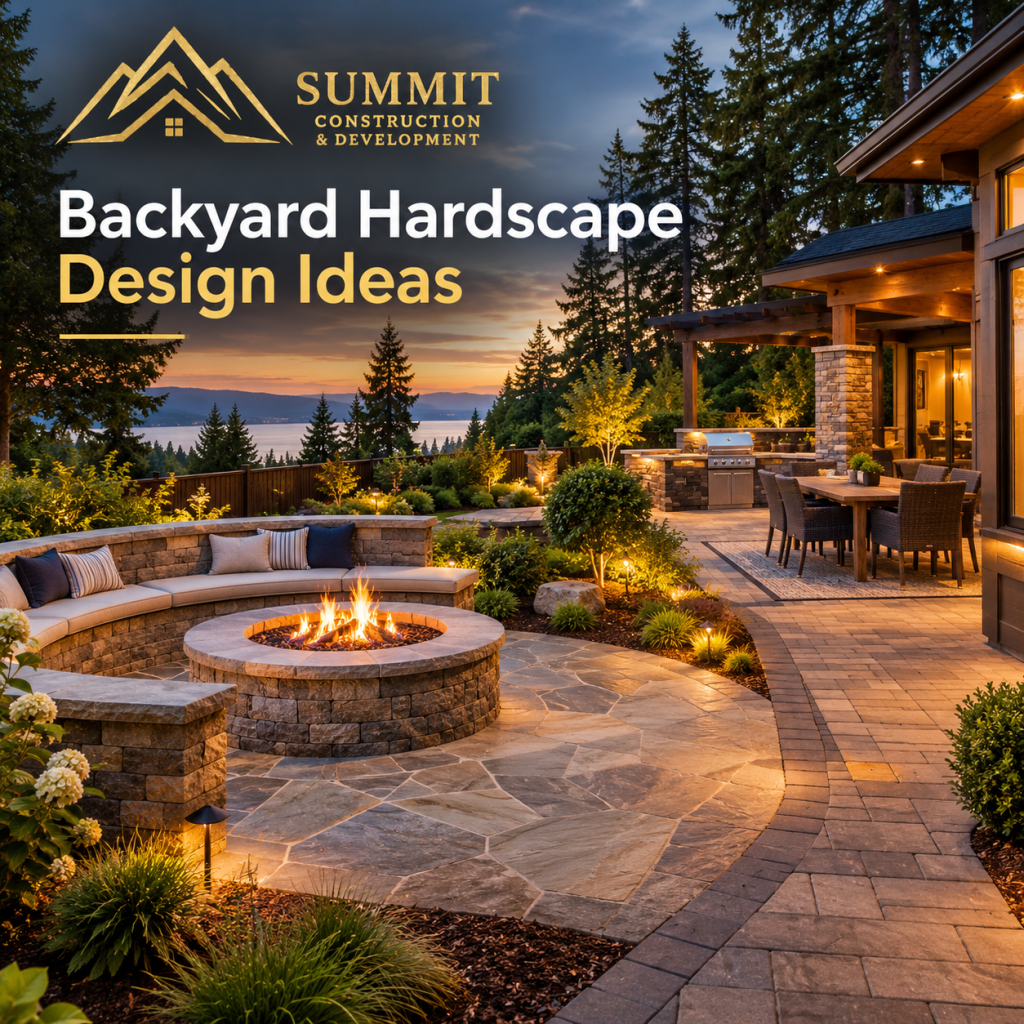
Hardscaping, the non-plant, structural elements of a landscape like patios, walkways, retaining walls, and outdoor kitchens, is what turns a backyard from a patch of grass into genuinely usable outdoor living space. In Western Washington, where many yards deal with slopes, drainage challenges, and a mix of sun and shade, thoughtful hardscape design matters even more than in flatter, drier climates. Here are ideas worth considering for your backyard, along with what makes them work well in our specific conditions. Patios: The Foundation of Outdoor Living A well-designed patio is often the anchor of a backyard hardscape plan, providing a stable, usable surface for furniture, dining, and entertaining. In our climate, proper drainage beneath and around a patio is essential, since standing water and freeze-thaw cycles can cause pavers or concrete to shift and crack over time if the base is not properly prepared. Natural stone, pavers, and stamped concrete are all popular choices, each offering a different balance of cost, appearance, and maintenance. Retaining Walls for Sloped Yards Many properties throughout the Seattle, Tacoma, and Bellevue areas include sloped terrain, which can limit usable outdoor space and create drainage and erosion issues over time. A well-engineered retaining wall does more than look attractive; it creates level, usable space, manages water runoff, and prevents soil erosion. Materials range from natural stone and segmental concrete block to timber, each suited to different budgets and aesthetics. Proper drainage behind a retaining wall is critical in our climate, where heavy seasonal rain puts significant hydrostatic pressure on wall structures that are not built with adequate drainage. Walkways and Pathways Beyond function, walkways guide movement through a yard and connect different outdoor spaces, like a patio, garden, or side gate, in a way that feels intentional rather than incidental. Permeable pavers are worth considering in our climate, since they allow rainwater to filter through rather than pool or run off, helping manage the significant seasonal rainfall Western Washington receives. Outdoor Kitchens and Fire Features Outdoor kitchens have grown increasingly popular, extending a home’s living and entertaining space into the yard during the region’s drier summer months. Even a modest built-in grill station with adjacent counter space can significantly expand how a backyard gets used. Fire pits and outdoor fireplaces extend usability further into the cooler shoulder seasons, giving homeowners a reason to use their outdoor space well beyond peak summer. Covered Structures Given how much of the year sees rain in Western Washington, a covered patio, pergola, or pavilion structure dramatically increases how often a backyard actually gets used. A solid roof structure allows outdoor entertaining even during light rain, while a pergola offers partial shade and definition to a space without fully enclosing it. Many homeowners pair a covered structure with an outdoor kitchen or fire feature to create a true four-season outdoor room. Drainage-Conscious Design This deserves special attention in our region. Any hardscape project, from a simple patio to a full outdoor living space, needs to account for where water goes during heavy rain. Poor drainage planning is one of the most common causes of hardscape failure in this climate, leading to cracked pavers, eroded soil, and water intrusion near the home’s foundation. A well-designed project includes proper grading, drainage systems, and permeable materials where appropriate, planned from the start rather than addressed after problems appear. Fire Pits and Seating Areas A dedicated fire pit area with built-in or freestanding seating creates a natural gathering spot and works well even in a modest backyard. Pairing it with low-voltage landscape lighting extends its usability into the evening and adds a polished, finished look to the overall space. Combining Elements Into a Cohesive Design The most successful backyard hardscape projects treat these elements as a connected system rather than isolated additions. A patio that flows into a walkway, which leads past a retaining wall creating a raised garden bed, which connects to a fire pit seating area, feels intentional and makes the entire yard easier to use and enjoy. Working with a contractor who thinks through the whole space, including drainage, sun exposure, and how the areas will actually be used, produces a far better result than tackling each element separately. Choosing Materials That Suit Your Home’s Style Hardscape materials should complement your home’s existing architecture rather than compete with it. A craftsman-style home often pairs well with natural stone or warm-toned pavers, while a more modern home may suit clean-lined concrete or large-format pavers with minimal joint lines. Bringing a material sample home and viewing it against your home’s exterior in different lighting, much like choosing paint or siding color, helps avoid a mismatch that only becomes obvious once the project is complete. Lighting: The Detail That Ties It All Together Landscape lighting is often an afterthought, added at the very end of a hardscape project if the budget allows, but it deserves more consideration than that. Well-placed path lighting improves safety along walkways and steps, uplighting can highlight an attractive tree or architectural feature, and string or overhead lighting extends how late into the evening a patio or seating area gets used. Low-voltage LED systems have made lighting significantly more energy-efficient and easier to install than older systems, and many can be integrated directly into a hardscape project’s electrical planning from the start rather than added as a separate undertaking later. In a region where daylight hours shrink considerably during the fall and winter months, good outdoor lighting also has a meaningful effect on how much a backyard gets used and enjoyed throughout the entire year, not just during the sunniest months of summer. Frequently Asked Questions Do I need a permit for a patio or retaining wall in Washington? It depends on the size and height of the structure and your local jurisdiction. Retaining walls above a certain height typically require a permit and engineering review, while smaller patios often do not. Your contractor can confirm what applies to your specific project. What hardscape material handles Washington’s rain best?
Hardwood vs. Laminate Flooring: Which Is Best for Your Home?
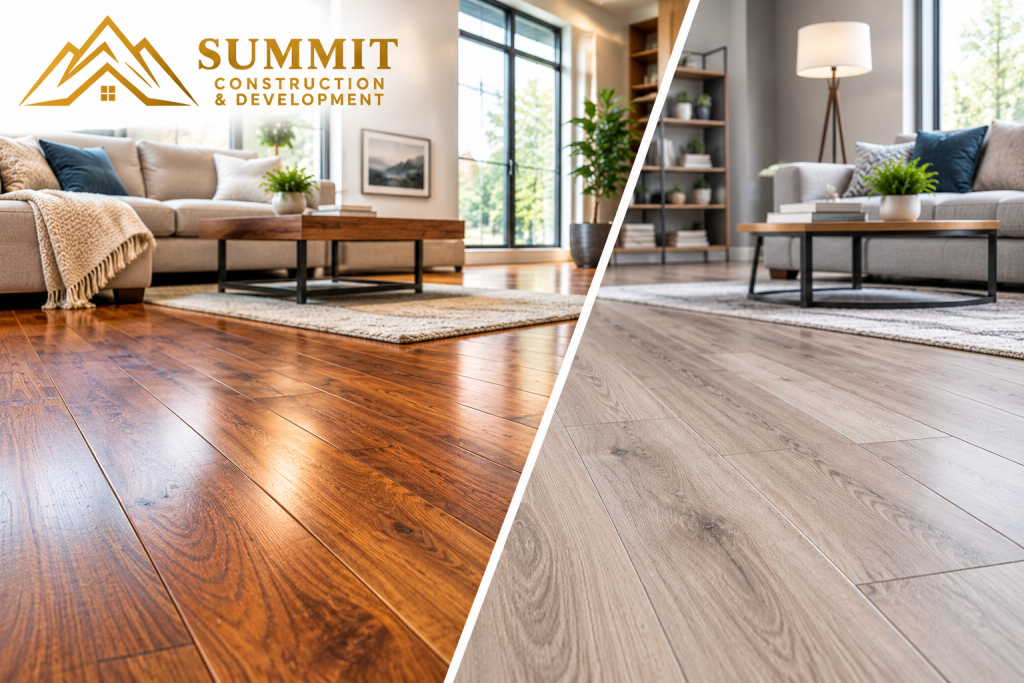
Flooring is one of the most impactful decisions in any remodel, both visually and financially, and few comparisons come up as often as hardwood versus laminate. Both can look beautiful. Both have genuine advantages. But they are fundamentally different products with different price points, different long-term performance, and different ideal use cases. Here is an honest comparison to help you decide which is right for your home. What They Actually Are Solid hardwood flooring is milled from a single piece of real wood, typically oak, maple, hickory, or similar species, and can be sanded and refinished multiple times over its lifespan. Engineered hardwood is a close cousin, made of a real wood veneer over a plywood or composite core, offering better stability in humidity and temperature changes while still being real wood on the surface. Laminate flooring, by contrast, is a synthetic product made of a high-resolution photographic layer of a wood (or stone) pattern, protected by a durable wear layer, over a composite core. It looks like wood but contains none. Cost Comparison This is one of the clearest differentiators. Laminate flooring is significantly less expensive than solid or engineered hardwood, both in material cost and often in installation, since laminate frequently uses simpler click-lock installation methods. Solid hardwood sits at the higher end of the price spectrum, with engineered hardwood typically landing somewhere in between, depending on the wood species and veneer thickness. Durability and Daily Wear Laminate’s wear layer is genuinely tough and resists scratches from pet claws and everyday foot traffic quite well, often better than softer hardwood species. However, laminate cannot be refinished. Once the wear layer is damaged or the surface becomes worn, the affected planks need to be replaced rather than sanded down. Hardwood, while more susceptible to surface scratches and dents depending on the wood species, has a major long-term advantage: it can be sanded and refinished multiple times over its life, which means a hardwood floor can look brand new again decades after installation, something laminate cannot do. Moisture and Climate Considerations This matters more in Western Washington’s damp climate than people often expect. Laminate flooring, despite looking like wood, generally handles moisture and humidity fluctuations better than solid hardwood, which can expand, contract, warp, or cup when exposed to excess moisture. Engineered hardwood handles humidity changes better than solid hardwood due to its layered construction, making it a reasonable middle ground for homes with variable humidity, though neither laminate nor hardwood is recommended for consistently wet areas like bathrooms. Look and Feel This is where genuine hardwood still has an edge for many homeowners. Real wood has natural grain variation, depth, and a tactile warmth that even high-quality laminate replicates but does not fully match. That said, laminate technology has improved substantially, and many modern laminate products are visually convincing, especially at a normal viewing distance. If having authentic, natural material matters to you, or if you plan to refinish rather than replace flooring down the road, hardwood remains the choice that best delivers that. Maintenance Both flooring types are relatively low maintenance day to day, requiring regular sweeping and occasional damp mopping. Hardwood benefits from periodic refinishing over its lifespan and should avoid standing water. Laminate is generally more forgiving of everyday spills, provided they are cleaned up promptly, since standing water can still damage the composite core over time if it seeps into seams. Resale Value Real hardwood flooring is widely viewed as a premium feature by home buyers and often has a positive impact on resale value and how quickly a home sells, particularly in higher-end markets. Laminate is a perfectly acceptable flooring choice but does not carry the same premium perception, which is worth considering if you are remodeling with resale in mind, particularly for a primary living area. Underfoot Comfort and Sound Beyond durability and moisture resistance, how a floor feels and sounds underfoot is worth considering, especially in a home with multiple levels. Hardwood tends to offer a slightly warmer, more forgiving feel than laminate, particularly when installed over a proper underlayment, and it also tends to transmit less hollow, echoing sound when walked on. Laminate can sometimes have a harder, more hollow-sounding feel, though quality underlayment specifically designed for sound dampening narrows this gap considerably. Which Should You Choose? Choose hardwood if: You want the authentic look and feel of real wood, you plan to stay in your home long enough to benefit from refinishing down the road, resale value is a priority, and your budget supports the higher upfront cost. Choose laminate if: Budget is the primary driver, you have pets or heavy foot traffic and want a scratch-resistant surface, you are updating a rental or investment property, or you want a wood look in a space with more humidity variation, like a basement. Consider engineered hardwood if: You want the authenticity of real wood with better performance in variable humidity, and you are willing to pay a bit more than laminate for that combination. Installation Considerations Installation methods differ meaningfully between the two materials, which affects both cost and timeline. Laminate flooring typically uses a floating click-lock installation that does not require nails, glue, or a fully finished subfloor beneath it, which makes it faster to install and often more forgiving of minor subfloor imperfections. Solid hardwood is usually nailed or stapled directly to the subfloor and requires a properly prepared, flat surface underneath. Engineered hardwood can sometimes be installed as a floating floor similar to laminate, or glued or nailed down depending on the specific product and subfloor conditions. Acclimation is another factor worth understanding. Solid hardwood in particular needs time to acclimate to your home’s humidity and temperature before installation, typically several days, to reduce the risk of gaps or buckling after installation. Laminate generally requires less acclimation time, which is another reason it often has a faster overall project timeline than hardwood. Frequently Asked Questions Can laminate flooring be refinished like hardwood? No. Laminate’s wear layer cannot be
Best Roofing Materials for Pacific Northwest Weather

Choosing a roofing material anywhere else in the country is a different exercise than choosing one in Western Washington. Here, the deciding factors are not extreme heat or heavy snow loads but near-constant rain, persistent moisture, moss and algae growth, and the occasional windstorm. A roofing material that performs beautifully in Arizona or the Midwest is not automatically a good fit for Seattle, Tacoma, or Everett. Here is how the most common roofing materials actually perform in our climate. Asphalt Shingles Asphalt shingles remain the most popular roofing material in the region, and for good reason. They are cost-effective, widely available, come in a broad range of colors and styles, and are straightforward to repair when isolated damage occurs. In a climate like ours, the key upgrade to look for is algae-resistant, or “AR-rated,” shingles, which are treated to slow the growth of the blue-green algae and moss that thrive in persistent moisture. Standard asphalt shingles will develop streaking and moss growth faster in this climate than algae-resistant versions. Asphalt shingles typically last several decades depending on the specific product and installation quality, and they remain the default choice for most residential roofs throughout King, Pierce, and Snohomish counties because they balance cost, appearance, and performance well. Architectural (Dimensional) Shingles A step up from standard three-tab asphalt shingles, architectural shingles are thicker, more textured, and generally more wind-resistant, which matters during the region’s occasional windstorms. They also tend to hide minor roof imperfections better and offer a more dimensional, higher-end appearance. The added durability and curb appeal come at a moderate cost increase over standard asphalt shingles, but many homeowners find the tradeoff worthwhile. Metal Roofing Metal roofing has grown significantly in popularity throughout the Pacific Northwest, and its performance in our climate explains why. Metal sheds water efficiently, resists moss growth far better than asphalt, and holds up well to wind. It also tends to last considerably longer than asphalt shingles, often several decades longer, which can offset its higher upfront cost over the life of the roof. Standing seam metal roofing in particular has become popular for its clean, modern look and excellent water-shedding performance, though it comes at a premium price point compared to asphalt. One consideration: metal roofing can be noisier during heavy rain unless proper insulation and underlayment are used, something a knowledgeable contractor will account for in the installation. Cedar Shake Cedar shake has a long history in the Pacific Northwest and offers a distinctive, natural look that suits many of the region’s craftsman and rustic-style homes. However, wood is inherently more vulnerable to moisture damage, rot, and moss growth than synthetic materials, and it requires more regular maintenance, including periodic treatment, to perform well in our wet climate. Homeowners who choose cedar shake for its appearance should budget for ongoing maintenance as part of the decision, not just the installation cost. Composite and Synthetic Shingles Composite shingles are engineered to mimic the look of cedar shake or slate while offering better moisture resistance and lower maintenance than natural materials. They are a reasonable middle ground for homeowners who want a distinctive look without the ongoing upkeep that natural wood or stone requires, though they come at a higher cost than standard asphalt. Tile and Slate True tile and slate roofing are less common in this region, partly due to cost and partly due to the structural reinforcement they require, since both are significantly heavier than asphalt or metal. When properly installed, they offer excellent longevity and a distinctive appearance, but they are a bigger investment and typically only make sense for homes with the architectural style and structural capacity to support them. What Actually Matters Most in Our Climate Regardless of which material you choose, a few factors matter more in Western Washington than in drier climates: Proper ventilation reduces trapped moisture in the attic, which helps prevent rot and extends the life of any roofing material. Quality underlayment provides a critical second line of defense against the moisture that inevitably gets past the surface material over time. Moss and algae resistance, whether built into the material or maintained through periodic cleaning, significantly affects how long a roof looks good and performs well. Proper flashing around chimneys, vents, and valleys is where the majority of roof leaks actually originate, regardless of the roofing material chosen. Ventilation’s Role in Roofing Performance Regardless of the material on top, a roofing system is only as good as the ventilation underneath it. Proper attic ventilation regulates temperature and moisture, which prevents condensation buildup that can rot decking from below, a failure mode that has nothing to do with the surface material’s quality. In our humid climate, balanced intake and exhaust ventilation is especially important, and it is worth having your roofer evaluate your attic’s ventilation as part of any replacement project rather than treating it as a separate concern. Making the Right Choice for Your Home The right roofing material depends on your budget, how long you plan to stay in your home, your home’s architectural style, and how much ongoing maintenance you are willing to take on. Asphalt shingles remain the practical choice for most homeowners. Metal roofing makes sense for those prioritizing longevity and low maintenance. Cedar shake and specialty materials suit homeowners prioritizing a specific aesthetic and willing to invest in upkeep. Warranty Considerations by Material Warranties vary significantly by roofing material and manufacturer, and understanding what is actually covered matters as much as the length of the warranty itself. Asphalt shingle warranties typically cover material defects for a set number of years, though many are prorated, meaning the coverage value decreases over time. Metal roofing often carries longer warranties reflecting its longer expected lifespan, while cedar shake and specialty materials may carry more limited warranty coverage given their higher maintenance requirements. It is also worth distinguishing between a manufacturer’s material warranty and a contractor’s workmanship warranty, since these are separate and both matter. A premium roofing material installed poorly will still fail