Flooring decisions in Seattle come with a unique set of considerations that homeowners in drier climates rarely think about. Muddy shoes tracked in during nine months of rain, humidity that fluctuates with the seasons, hiking gear and rain boots by the door, and pets that spend plenty of time outdoors all put real demands on a floor. Choosing flooring that fits our climate and lifestyle, not just our sense of style, makes a real difference in how well it holds up over time.
What Seattle Homes Actually Need From Their Flooring
Before getting into specific materials, it helps to define what “good flooring” actually means in this region:
- Moisture tolerance, since entryways, mudrooms, and even living spaces see more tracked-in water and humidity fluctuation than in drier parts of the country
- Durability against grit and dirt, since sand, gravel, and mud get tracked indoors far more often here than in drier climates
- A finish that hides scuffs, given how much foot traffic many Seattle homes see from an active, outdoor-oriented lifestyle
- Comfort underfoot, particularly in homes without central air, where flooring affects how a room feels temperature-wise
Luxury Vinyl Plank (LVP)
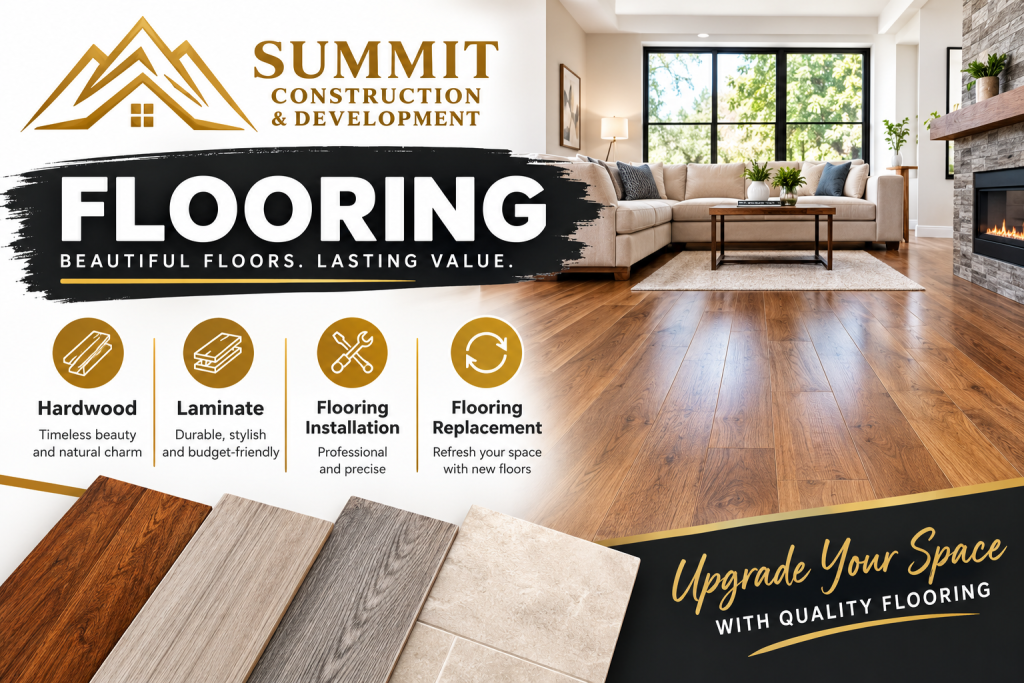
Luxury vinyl plank has become one of the most popular flooring choices in the Seattle area, and it is easy to see why. LVP is highly water-resistant, often fully waterproof depending on the product, making it an excellent choice for entryways, mudrooms, kitchens, and homes with pets or young children. It also tends to be more affordable than hardwood while offering a wide range of realistic wood-look and stone-look finishes. LVP holds up well to the grit and moisture that come with our climate, and it is comfortable underfoot compared to tile.
Engineered Hardwood
For homeowners who want the authentic look of real wood but need better performance in a climate with humidity swings, engineered hardwood is a strong option. Its layered construction resists the expansion, contraction, and warping that can affect solid hardwood in variable moisture conditions, while still offering a genuine wood surface that can be refinished.
Porcelain Tile
In entryways, mudrooms, bathrooms, and kitchens, porcelain tile is hard to beat for moisture resistance and durability. It handles tracked-in water, mud, and heavy foot traffic extremely well, and modern porcelain tile comes in wood-look and stone-look finishes that offer more design flexibility than older ceramic options. The tradeoff is a harder, colder surface underfoot compared to wood or vinyl, which matters most in living spaces where comfort is a priority.
Solid Hardwood
Solid hardwood remains a beautiful, timeless choice, particularly for formal living areas, dining rooms, and bedrooms away from high-moisture zones. It is best kept away from entryways, mudrooms, and areas with regular water exposure, given its vulnerability to moisture damage. In the right rooms, though, few materials match its warmth and long-term refinishing potential.
Carpet
Carpet still has a place in Seattle homes, particularly in bedrooms, where comfort and sound absorption matter more than moisture resistance. Wool and wool-blend carpets in particular handle our climate’s humidity reasonably well and offer good durability, though carpet is generally not recommended for high-moisture or high-traffic entry areas.
Working With a Flooring Professional
A knowledgeable flooring contractor does more than install materials; they help you avoid mismatches between a product’s marketing and its real-world performance in our specific climate. Ask any contractor you are considering about their experience with moisture-related flooring failures in the region and how they approach subfloor preparation and moisture testing before installation begins. This upfront diligence is far less costly than addressing a failed installation after the fact.
Matching Flooring to Each Room
Rather than choosing one flooring material for the entire home, many Seattle homeowners get the best results by matching material to function:
- Entryways and mudrooms: Porcelain tile or waterproof LVP to handle tracked-in moisture and grit
- Kitchens: Porcelain tile or LVP for moisture resistance and easy cleanup
- Living and dining rooms: Engineered or solid hardwood for warmth and long-term value, or LVP for a similar look with better moisture tolerance
- Bedrooms: Carpet for comfort, or hardwood or LVP for a cleaner, allergy-friendly surface
- Bathrooms: Porcelain tile, given its strong performance in consistently high-moisture environments
Subfloor and Moisture Considerations Before Installation
Before any new flooring goes in, it is worth having the subfloor evaluated, particularly in older homes throughout Seattle’s established neighborhoods where moisture issues or uneven subfloors are more common. Installing beautiful new flooring over a subfloor with hidden moisture problems or structural issues is a recipe for premature failure, regardless of how durable the flooring material itself is. A vapor barrier is often recommended for certain flooring types, particularly over concrete slabs or in below-grade spaces, to prevent moisture from wicking up into the new flooring over time.
Taking the time to address subfloor condition and moisture control before installation, rather than after a problem appears, is one of the most overlooked but important steps in any flooring project in our climate.
Budgeting Across Multiple Rooms
When flooring is part of a larger whole-home project, it helps to prioritize which rooms get which materials based on both use and budget. High-traffic, high-moisture areas like entryways and kitchens are worth investing in more durable materials even if it means being more conservative in lower-traffic rooms like formal dining rooms or guest bedrooms. Buying flooring material in bulk across multiple rooms, when the same or a coordinating material is used throughout much of the home, can sometimes reduce per-square-foot material costs compared to purchasing smaller quantities for isolated rooms.
Frequently Asked Questions
Is luxury vinyl plank a good long-term investment for a Seattle home? Yes, particularly in high-traffic and high-moisture areas. Quality LVP is durable, water-resistant, and increasingly accepted by buyers, making it a practical long-term choice, though genuine hardwood still carries a stronger premium perception in resale.
What is the best flooring for a mudroom in a rainy climate? Porcelain tile and waterproof LVP are both excellent choices for mudrooms, since they handle tracked-in water, mud, and grit without the risk of moisture damage that hardwood faces.
Does Seattle’s climate affect hardwood flooring differently than drier regions? Yes. Higher and more variable humidity can cause solid hardwood to expand and contract more than it would in a drier, more stable climate, which is why engineered hardwood or proper acclimation and humidity control matter more here.
Can I mix flooring types throughout my home? Absolutely, and many homeowners do exactly that, choosing moisture-resistant materials for entry and wet areas while using hardwood or carpet in living spaces and bedrooms. A cohesive color palette across materials helps the transitions feel intentional rather than mismatched.
Get Flooring Guidance Built for Our Climate
The right flooring choice depends on your household, your budget, and how each room in your home is actually used. Summit Construction & Development helps homeowners throughout Seattle, Bellevue, Tacoma, Everett, Redmond, and the surrounding Western Washington communities choose and install flooring that performs well in our climate for years to come. Call (206) 992-4400 or email info@summitconstructionwa.com to schedule a consultation.