Flooring is one of the most impactful decisions in any remodel, both visually and financially, and few comparisons come up as often as hardwood versus laminate. Both can look beautiful. Both have genuine advantages. But they are fundamentally different products with different price points, different long-term performance, and different ideal use cases. Here is an honest comparison to help you decide which is right for your home.
What They Actually Are
Solid hardwood flooring is milled from a single piece of real wood, typically oak, maple, hickory, or similar species, and can be sanded and refinished multiple times over its lifespan. Engineered hardwood is a close cousin, made of a real wood veneer over a plywood or composite core, offering better stability in humidity and temperature changes while still being real wood on the surface.
Laminate flooring, by contrast, is a synthetic product made of a high-resolution photographic layer of a wood (or stone) pattern, protected by a durable wear layer, over a composite core. It looks like wood but contains none.
Cost Comparison
This is one of the clearest differentiators. Laminate flooring is significantly less expensive than solid or engineered hardwood, both in material cost and often in installation, since laminate frequently uses simpler click-lock installation methods. Solid hardwood sits at the higher end of the price spectrum, with engineered hardwood typically landing somewhere in between, depending on the wood species and veneer thickness.
Durability and Daily Wear
Laminate’s wear layer is genuinely tough and resists scratches from pet claws and everyday foot traffic quite well, often better than softer hardwood species. However, laminate cannot be refinished. Once the wear layer is damaged or the surface becomes worn, the affected planks need to be replaced rather than sanded down.
Hardwood, while more susceptible to surface scratches and dents depending on the wood species, has a major long-term advantage: it can be sanded and refinished multiple times over its life, which means a hardwood floor can look brand new again decades after installation, something laminate cannot do.
Moisture and Climate Considerations
This matters more in Western Washington’s damp climate than people often expect. Laminate flooring, despite looking like wood, generally handles moisture and humidity fluctuations better than solid hardwood, which can expand, contract, warp, or cup when exposed to excess moisture. Engineered hardwood handles humidity changes better than solid hardwood due to its layered construction, making it a reasonable middle ground for homes with variable humidity, though neither laminate nor hardwood is recommended for consistently wet areas like bathrooms.
Look and Feel
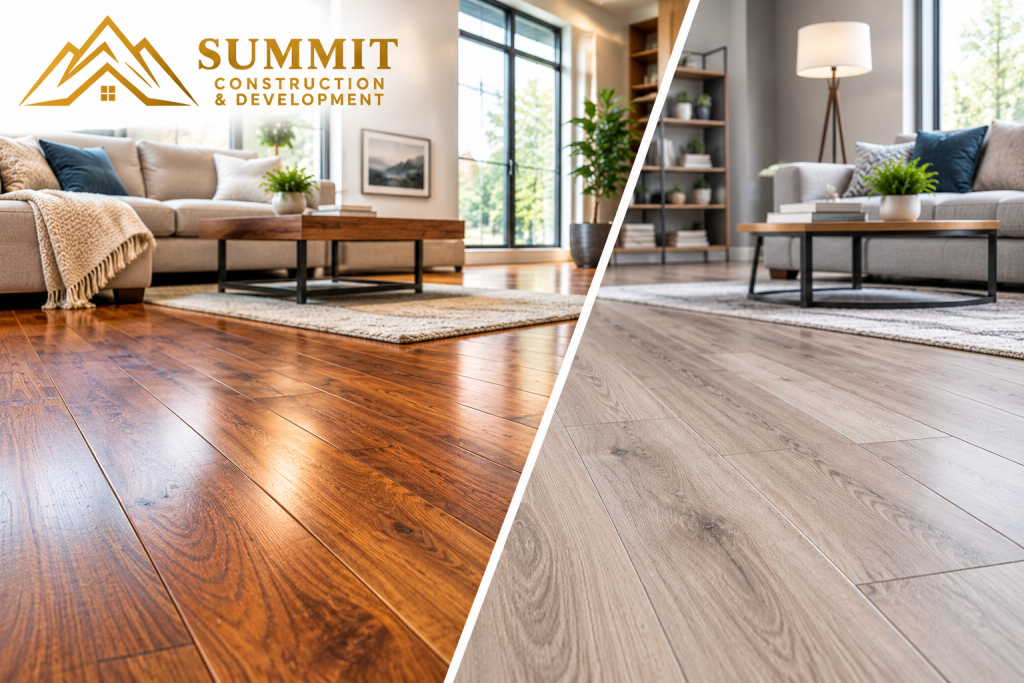
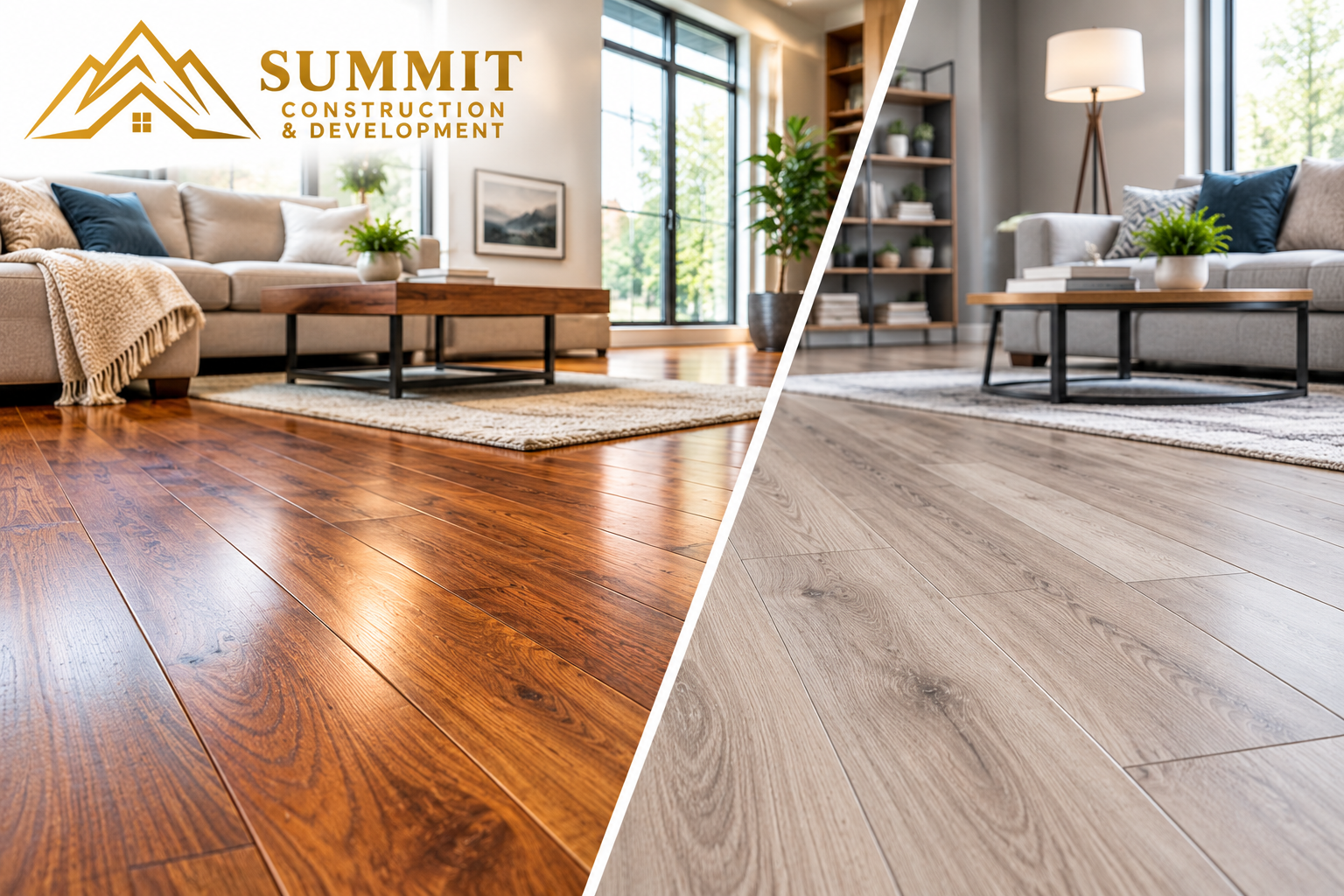
This is where genuine hardwood still has an edge for many homeowners. Real wood has natural grain variation, depth, and a tactile warmth that even high-quality laminate replicates but does not fully match. That said, laminate technology has improved substantially, and many modern laminate products are visually convincing, especially at a normal viewing distance. If having authentic, natural material matters to you, or if you plan to refinish rather than replace flooring down the road, hardwood remains the choice that best delivers that.
Maintenance
Both flooring types are relatively low maintenance day to day, requiring regular sweeping and occasional damp mopping. Hardwood benefits from periodic refinishing over its lifespan and should avoid standing water. Laminate is generally more forgiving of everyday spills, provided they are cleaned up promptly, since standing water can still damage the composite core over time if it seeps into seams.
Resale Value
Real hardwood flooring is widely viewed as a premium feature by home buyers and often has a positive impact on resale value and how quickly a home sells, particularly in higher-end markets. Laminate is a perfectly acceptable flooring choice but does not carry the same premium perception, which is worth considering if you are remodeling with resale in mind, particularly for a primary living area.
Underfoot Comfort and Sound
Beyond durability and moisture resistance, how a floor feels and sounds underfoot is worth considering, especially in a home with multiple levels. Hardwood tends to offer a slightly warmer, more forgiving feel than laminate, particularly when installed over a proper underlayment, and it also tends to transmit less hollow, echoing sound when walked on. Laminate can sometimes have a harder, more hollow-sounding feel, though quality underlayment specifically designed for sound dampening narrows this gap considerably.
Which Should You Choose?
Choose hardwood if: You want the authentic look and feel of real wood, you plan to stay in your home long enough to benefit from refinishing down the road, resale value is a priority, and your budget supports the higher upfront cost.
Choose laminate if: Budget is the primary driver, you have pets or heavy foot traffic and want a scratch-resistant surface, you are updating a rental or investment property, or you want a wood look in a space with more humidity variation, like a basement.
Consider engineered hardwood if: You want the authenticity of real wood with better performance in variable humidity, and you are willing to pay a bit more than laminate for that combination.
Installation Considerations
Installation methods differ meaningfully between the two materials, which affects both cost and timeline. Laminate flooring typically uses a floating click-lock installation that does not require nails, glue, or a fully finished subfloor beneath it, which makes it faster to install and often more forgiving of minor subfloor imperfections. Solid hardwood is usually nailed or stapled directly to the subfloor and requires a properly prepared, flat surface underneath. Engineered hardwood can sometimes be installed as a floating floor similar to laminate, or glued or nailed down depending on the specific product and subfloor conditions.
Acclimation is another factor worth understanding. Solid hardwood in particular needs time to acclimate to your home’s humidity and temperature before installation, typically several days, to reduce the risk of gaps or buckling after installation. Laminate generally requires less acclimation time, which is another reason it often has a faster overall project timeline than hardwood.
Frequently Asked Questions
Can laminate flooring be refinished like hardwood? No. Laminate’s wear layer cannot be sanded and refinished. When it becomes damaged or worn, the affected planks are typically replaced rather than restored.
Is engineered hardwood as good as solid hardwood? Engineered hardwood is real wood on the surface and performs very well, particularly in terms of stability in fluctuating humidity. It generally cannot be refinished as many times as solid hardwood due to the thinner wood veneer, but quality engineered products can still be refinished at least once or twice.
Which is better for a home with pets? Laminate’s wear layer is generally more scratch-resistant against pet claws than softer hardwood species like pine, though hardness varies significantly by wood species. Harder hardwood species like oak or hickory hold up reasonably well against pets too.
Does laminate flooring reduce home value compared to hardwood? It can, particularly in comparison to genuine hardwood in similarly priced homes in the same market. However, quality laminate is a widely accepted, practical flooring choice and is unlikely to significantly hurt value compared to worn or outdated existing flooring.
Not Sure Which Flooring Fits Your Home?
The right flooring choice depends on your budget, lifestyle, and long-term plans for your home. Summit Construction & Development helps homeowners throughout Seattle, Bellevue, Tacoma, Everett, Redmond, and the surrounding Western Washington communities choose and install flooring that fits their needs. Call (206) 992-4400 or email info@summitconstructionwa.com to schedule a consultation.