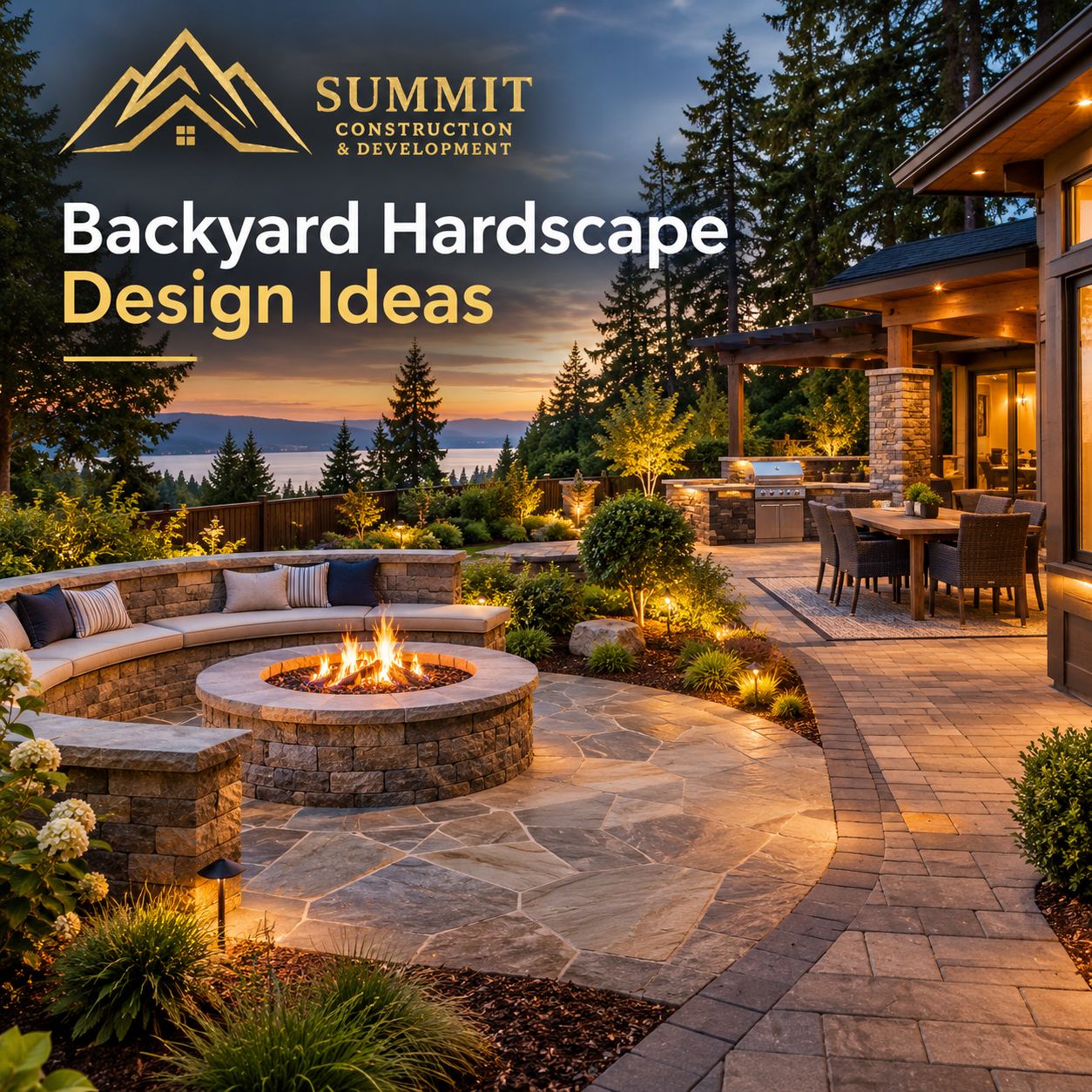
Hardscaping, the non-plant, structural elements of a landscape like patios, walkways, retaining walls, and outdoor kitchens, is what turns a backyard from a patch of grass into genuinely usable outdoor living space. In Western Washington, where many yards deal with slopes, drainage challenges, and a mix of sun and shade, thoughtful hardscape design matters even more than in flatter, drier climates. Here are ideas worth considering for your backyard, along with what makes them work well in our specific conditions.
Patios: The Foundation of Outdoor Living
A well-designed patio is often the anchor of a backyard hardscape plan, providing a stable, usable surface for furniture, dining, and entertaining. In our climate, proper drainage beneath and around a patio is essential, since standing water and freeze-thaw cycles can cause pavers or concrete to shift and crack over time if the base is not properly prepared. Natural stone, pavers, and stamped concrete are all popular choices, each offering a different balance of cost, appearance, and maintenance.
Retaining Walls for Sloped Yards
Many properties throughout the Seattle, Tacoma, and Bellevue areas include sloped terrain, which can limit usable outdoor space and create drainage and erosion issues over time. A well-engineered retaining wall does more than look attractive; it creates level, usable space, manages water runoff, and prevents soil erosion. Materials range from natural stone and segmental concrete block to timber, each suited to different budgets and aesthetics. Proper drainage behind a retaining wall is critical in our climate, where heavy seasonal rain puts significant hydrostatic pressure on wall structures that are not built with adequate drainage.
Walkways and Pathways
Beyond function, walkways guide movement through a yard and connect different outdoor spaces, like a patio, garden, or side gate, in a way that feels intentional rather than incidental. Permeable pavers are worth considering in our climate, since they allow rainwater to filter through rather than pool or run off, helping manage the significant seasonal rainfall Western Washington receives.
Outdoor Kitchens and Fire Features
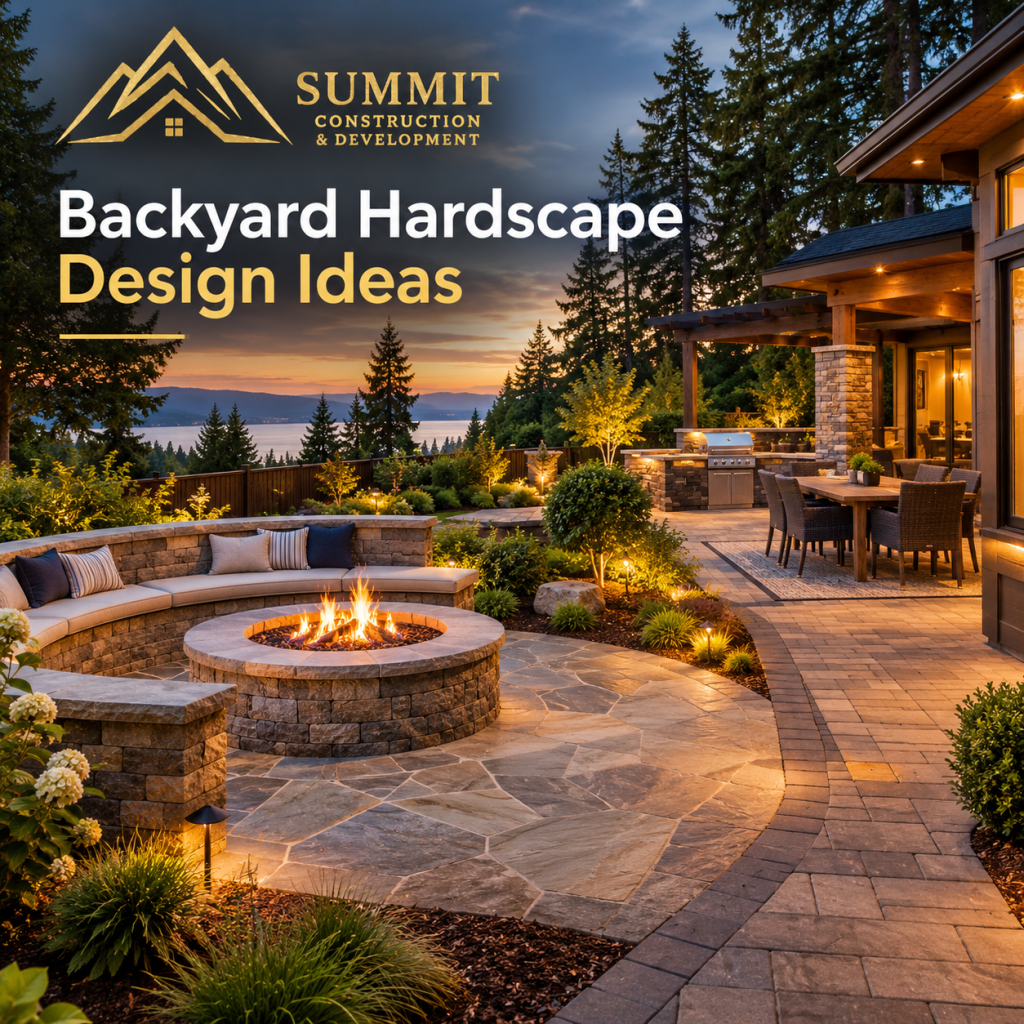
Outdoor kitchens have grown increasingly popular, extending a home’s living and entertaining space into the yard during the region’s drier summer months. Even a modest built-in grill station with adjacent counter space can significantly expand how a backyard gets used. Fire pits and outdoor fireplaces extend usability further into the cooler shoulder seasons, giving homeowners a reason to use their outdoor space well beyond peak summer.
Covered Structures
Given how much of the year sees rain in Western Washington, a covered patio, pergola, or pavilion structure dramatically increases how often a backyard actually gets used. A solid roof structure allows outdoor entertaining even during light rain, while a pergola offers partial shade and definition to a space without fully enclosing it. Many homeowners pair a covered structure with an outdoor kitchen or fire feature to create a true four-season outdoor room.
Drainage-Conscious Design
This deserves special attention in our region. Any hardscape project, from a simple patio to a full outdoor living space, needs to account for where water goes during heavy rain. Poor drainage planning is one of the most common causes of hardscape failure in this climate, leading to cracked pavers, eroded soil, and water intrusion near the home’s foundation. A well-designed project includes proper grading, drainage systems, and permeable materials where appropriate, planned from the start rather than addressed after problems appear.
Fire Pits and Seating Areas
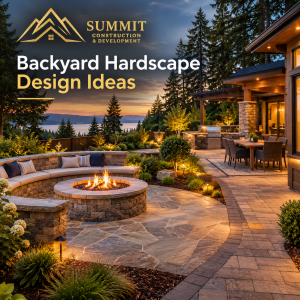
A dedicated fire pit area with built-in or freestanding seating creates a natural gathering spot and works well even in a modest backyard. Pairing it with low-voltage landscape lighting extends its usability into the evening and adds a polished, finished look to the overall space.
Combining Elements Into a Cohesive Design
The most successful backyard hardscape projects treat these elements as a connected system rather than isolated additions. A patio that flows into a walkway, which leads past a retaining wall creating a raised garden bed, which connects to a fire pit seating area, feels intentional and makes the entire yard easier to use and enjoy. Working with a contractor who thinks through the whole space, including drainage, sun exposure, and how the areas will actually be used, produces a far better result than tackling each element separately.
Choosing Materials That Suit Your Home’s Style
Hardscape materials should complement your home’s existing architecture rather than compete with it. A craftsman-style home often pairs well with natural stone or warm-toned pavers, while a more modern home may suit clean-lined concrete or large-format pavers with minimal joint lines. Bringing a material sample home and viewing it against your home’s exterior in different lighting, much like choosing paint or siding color, helps avoid a mismatch that only becomes obvious once the project is complete.
Lighting: The Detail That Ties It All Together
Landscape lighting is often an afterthought, added at the very end of a hardscape project if the budget allows, but it deserves more consideration than that. Well-placed path lighting improves safety along walkways and steps, uplighting can highlight an attractive tree or architectural feature, and string or overhead lighting extends how late into the evening a patio or seating area gets used. Low-voltage LED systems have made lighting significantly more energy-efficient and easier to install than older systems, and many can be integrated directly into a hardscape project’s electrical planning from the start rather than added as a separate undertaking later.
In a region where daylight hours shrink considerably during the fall and winter months, good outdoor lighting also has a meaningful effect on how much a backyard gets used and enjoyed throughout the entire year, not just during the sunniest months of summer.
Frequently Asked Questions
Do I need a permit for a patio or retaining wall in Washington? It depends on the size and height of the structure and your local jurisdiction. Retaining walls above a certain height typically require a permit and engineering review, while smaller patios often do not. Your contractor can confirm what applies to your specific project.
What hardscape material handles Washington’s rain best? Natural stone and quality concrete pavers with a properly prepared, well-draining base handle our climate well. Permeable pavers are an especially strong choice where drainage is a concern, since they allow water to filter through rather than pool on the surface.
How much does a retaining wall typically cost? Cost depends heavily on the wall’s height, length, material, and the amount of engineering and drainage work required. Taller walls require more substantial engineering and drainage systems, which increases cost accordingly.
Can hardscaping help with a yard that has drainage problems? Yes, when designed correctly. Proper grading, retaining walls, permeable materials, and drainage systems can be incorporated directly into a hardscape design to manage water runoff and reduce erosion or pooling issues.
Turn Your Backyard Into Usable Outdoor Living Space
A well-planned hardscape project makes your backyard more functional, more beautiful, and better equipped to handle our climate. Summit Construction & Development designs and builds hardscape projects for homeowners throughout Seattle, Bellevue, Tacoma, Everett, Redmond, and the surrounding Western Washington communities. Call (206) 992-4400 or email info@summitconstructionwa.com to schedule a consultation.