
Choosing a roofing material anywhere else in the country is a different exercise than choosing one in Western Washington. Here, the deciding factors are not extreme heat or heavy snow loads but near-constant rain, persistent moisture, moss and algae growth, and the occasional windstorm. A roofing material that performs beautifully in Arizona or the Midwest is not automatically a good fit for Seattle, Tacoma, or Everett. Here is how the most common roofing materials actually perform in our climate.
Asphalt Shingles
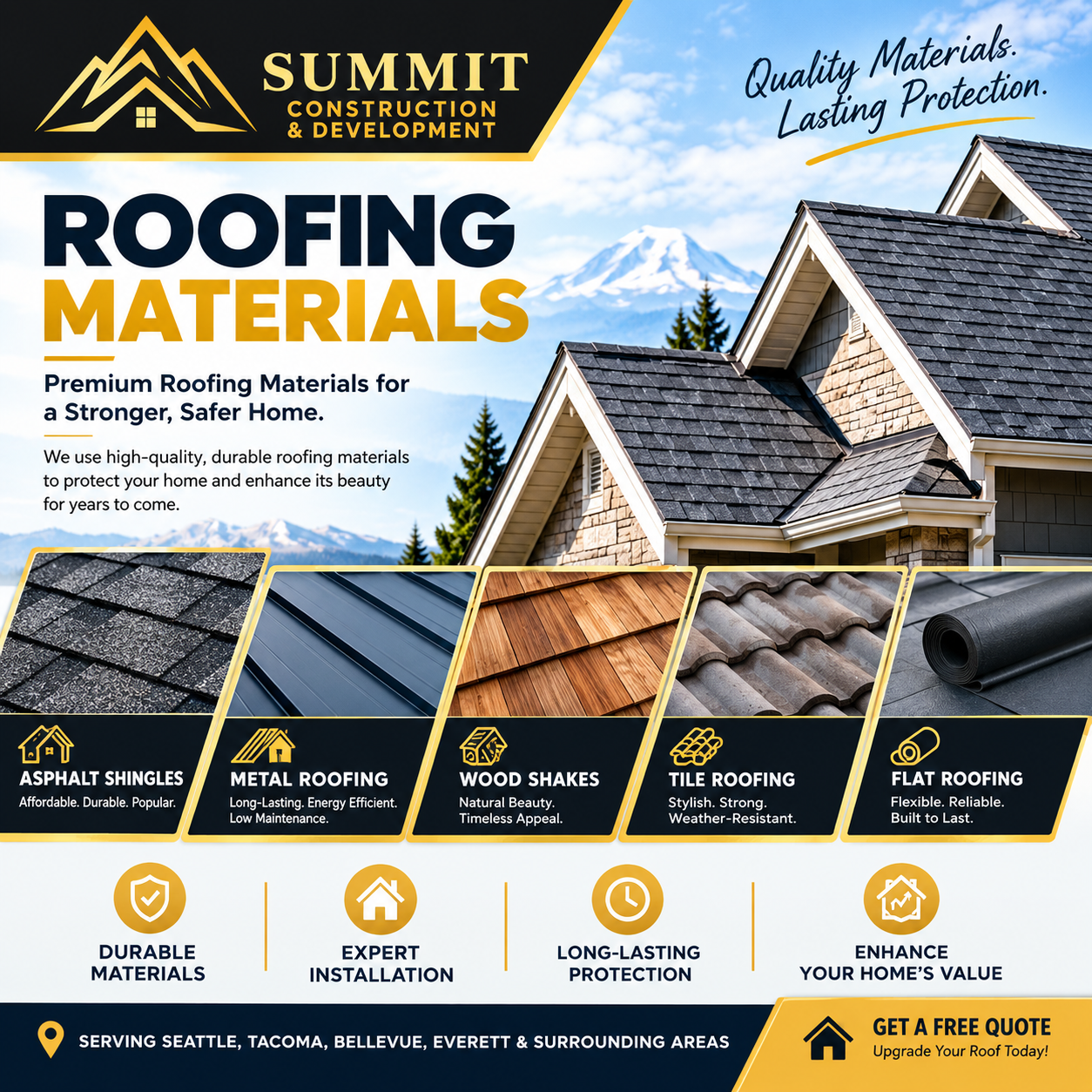
Asphalt shingles remain the most popular roofing material in the region, and for good reason. They are cost-effective, widely available, come in a broad range of colors and styles, and are straightforward to repair when isolated damage occurs. In a climate like ours, the key upgrade to look for is algae-resistant, or “AR-rated,” shingles, which are treated to slow the growth of the blue-green algae and moss that thrive in persistent moisture. Standard asphalt shingles will develop streaking and moss growth faster in this climate than algae-resistant versions.
Asphalt shingles typically last several decades depending on the specific product and installation quality, and they remain the default choice for most residential roofs throughout King, Pierce, and Snohomish counties because they balance cost, appearance, and performance well.
Architectural (Dimensional) Shingles
A step up from standard three-tab asphalt shingles, architectural shingles are thicker, more textured, and generally more wind-resistant, which matters during the region’s occasional windstorms. They also tend to hide minor roof imperfections better and offer a more dimensional, higher-end appearance. The added durability and curb appeal come at a moderate cost increase over standard asphalt shingles, but many homeowners find the tradeoff worthwhile.
Metal Roofing
Metal roofing has grown significantly in popularity throughout the Pacific Northwest, and its performance in our climate explains why. Metal sheds water efficiently, resists moss growth far better than asphalt, and holds up well to wind. It also tends to last considerably longer than asphalt shingles, often several decades longer, which can offset its higher upfront cost over the life of the roof. Standing seam metal roofing in particular has become popular for its clean, modern look and excellent water-shedding performance, though it comes at a premium price point compared to asphalt.
One consideration: metal roofing can be noisier during heavy rain unless proper insulation and underlayment are used, something a knowledgeable contractor will account for in the installation.
Cedar Shake
Cedar shake has a long history in the Pacific Northwest and offers a distinctive, natural look that suits many of the region’s craftsman and rustic-style homes. However, wood is inherently more vulnerable to moisture damage, rot, and moss growth than synthetic materials, and it requires more regular maintenance, including periodic treatment, to perform well in our wet climate. Homeowners who choose cedar shake for its appearance should budget for ongoing maintenance as part of the decision, not just the installation cost.
Composite and Synthetic Shingles
Composite shingles are engineered to mimic the look of cedar shake or slate while offering better moisture resistance and lower maintenance than natural materials. They are a reasonable middle ground for homeowners who want a distinctive look without the ongoing upkeep that natural wood or stone requires, though they come at a higher cost than standard asphalt.
Tile and Slate
True tile and slate roofing are less common in this region, partly due to cost and partly due to the structural reinforcement they require, since both are significantly heavier than asphalt or metal. When properly installed, they offer excellent longevity and a distinctive appearance, but they are a bigger investment and typically only make sense for homes with the architectural style and structural capacity to support them.
What Actually Matters Most in Our Climate
Regardless of which material you choose, a few factors matter more in Western Washington than in drier climates:
- Proper ventilation reduces trapped moisture in the attic, which helps prevent rot and extends the life of any roofing material.
- Quality underlayment provides a critical second line of defense against the moisture that inevitably gets past the surface material over time.
- Moss and algae resistance, whether built into the material or maintained through periodic cleaning, significantly affects how long a roof looks good and performs well.
- Proper flashing around chimneys, vents, and valleys is where the majority of roof leaks actually originate, regardless of the roofing material chosen.
Ventilation’s Role in Roofing Performance
Regardless of the material on top, a roofing system is only as good as the ventilation underneath it. Proper attic ventilation regulates temperature and moisture, which prevents condensation buildup that can rot decking from below, a failure mode that has nothing to do with the surface material’s quality. In our humid climate, balanced intake and exhaust ventilation is especially important, and it is worth having your roofer evaluate your attic’s ventilation as part of any replacement project rather than treating it as a separate concern.
Making the Right Choice for Your Home
The right roofing material depends on your budget, how long you plan to stay in your home, your home’s architectural style, and how much ongoing maintenance you are willing to take on. Asphalt shingles remain the practical choice for most homeowners. Metal roofing makes sense for those prioritizing longevity and low maintenance. Cedar shake and specialty materials suit homeowners prioritizing a specific aesthetic and willing to invest in upkeep.
Warranty Considerations by Material
Warranties vary significantly by roofing material and manufacturer, and understanding what is actually covered matters as much as the length of the warranty itself. Asphalt shingle warranties typically cover material defects for a set number of years, though many are prorated, meaning the coverage value decreases over time. Metal roofing often carries longer warranties reflecting its longer expected lifespan, while cedar shake and specialty materials may carry more limited warranty coverage given their higher maintenance requirements.
It is also worth distinguishing between a manufacturer’s material warranty and a contractor’s workmanship warranty, since these are separate and both matter. A premium roofing material installed poorly will still fail prematurely, regardless of how strong the material warranty is, which is why choosing an experienced, reputable installer is just as important as choosing the right material.
Frequently Asked Questions
Which roofing material lasts longest in Western Washington’s climate? Metal roofing generally offers the longest lifespan with the least maintenance in our climate, though quality asphalt shingles with proper installation and ventilation also perform reliably for decades.
Do algae-resistant shingles actually make a difference? Yes. Algae-resistant shingles are treated with materials, often copper or zinc granules, that inhibit algae and moss growth, which noticeably slows the streaking and discoloration common on standard shingles in humid, rainy climates.
Is metal roofing loud when it rains? With proper underlayment, insulation, and solid roof decking beneath the metal, noise is generally not a significant issue. It is more of a concern with older or improperly installed metal roofing systems.
How much more expensive is cedar shake than asphalt shingles? Cedar shake typically costs meaningfully more than asphalt shingles both for materials and installation, and it carries higher ongoing maintenance costs over its lifespan.
Get Expert Guidance on the Right Roof for Your Home
Choosing a roofing material is a long-term decision, and the right answer depends on your specific home, budget, and priorities. Summit Construction & Development helps homeowners throughout Seattle, Bellevue, Tacoma, Everett, Redmond, and the surrounding Western Washington communities select and install roofing that performs well in our climate for years to come. Call (206) 992-4400 or email info@summitconstructionwa.com to schedule a consultation.